
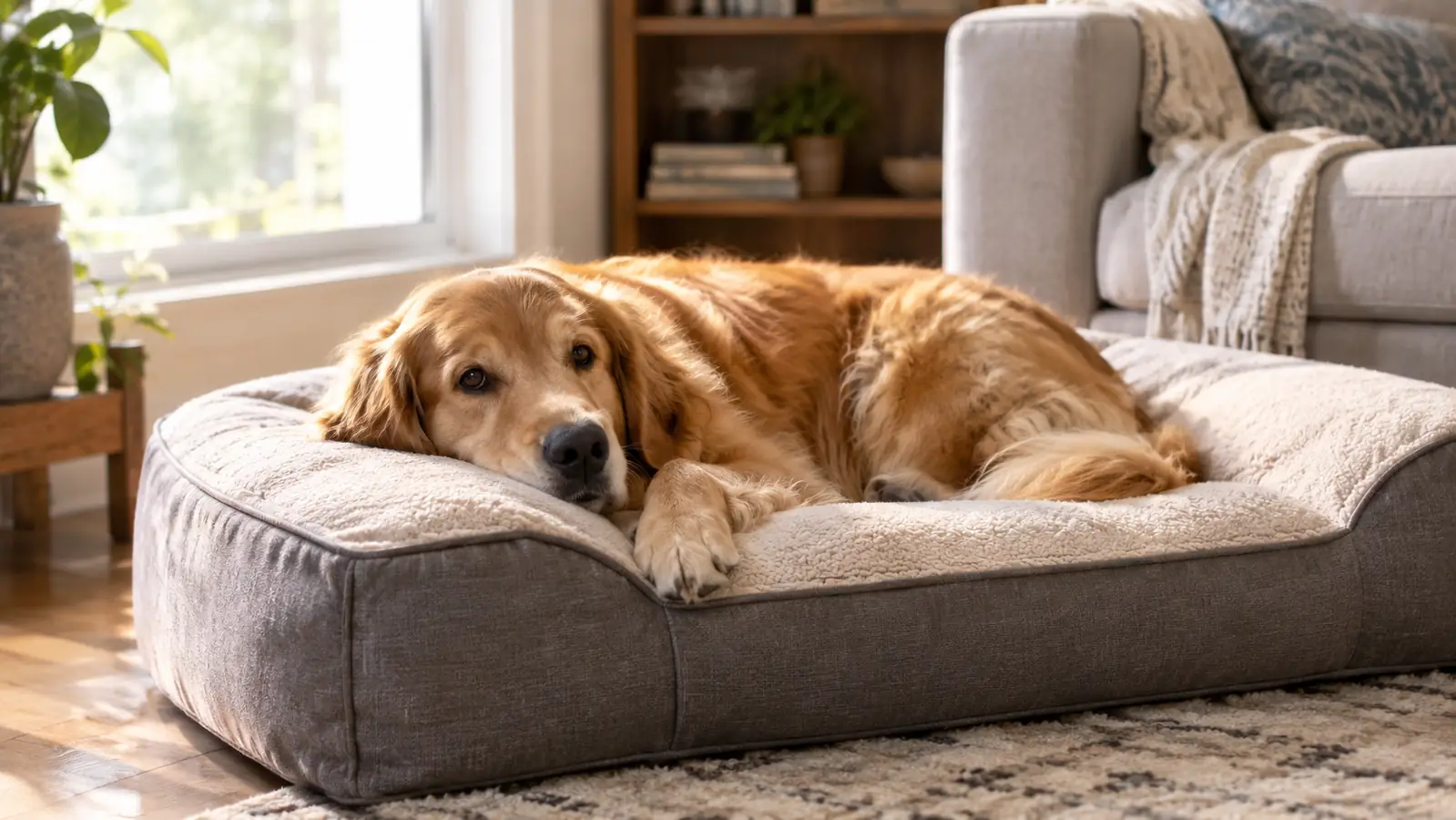
Six months ago, I was one bad purchase away from giving up on foam dog beds. The orthopedic mat I had bought the year before had flattened into a pancake, and Otis, my 68-pound Labrador mix, was spending his afternoons on the hardwood floor with one paw on the useless mat. He is seven years old, stiff in the back legs on cold Green Bay mornings, and too heavy for a bed that gives up. After a week of reading reviews and comparing foam densities, I ordered the Bedsure orthopedic dog bed. I picked Bedsure because the brand kept showing up in discussions from owners of older dogs, because the cover zipped off for washing, and because the reviews did not all sound like advertisements. This is the long-term report after six months of nearly every-night use.
The bed has handled more than I expected in those six months. Otis digs at the surface before he lies down, sheds enough fur that vacuuming the cover is a weekly event, and occasionally launches himself onto the bed from the couch. Pepper, my five-year-old tabby, also naps on it, and she kneads the fabric with her claws before she settles. None of that has ruined the cover, loosened the stitching, or flattened the foam. I have washed the cover roughly once every two weeks, flipped the foam core at the three-month mark, and watched Otis choose this bed over the carpet and the couch more often than not. The short version is that this bed has earned its place. The long version includes a few honest complaints, and you should read those before you order.
The Quick Verdict
After six months of nightly use by a 68-pound dog, the foam still springs back, the cover is machine-washable, and the base does not slip. It loses half a star for a zipper that catches at one corner and for a cover that is not waterproof.
Amazon Check Today's Price →Six months of daily use is the test this bed passed.
If you are tired of replacing flattened beds and you want to see current sizes and pricing for the Bedsure orthopedic bed, check the latest listing on Amazon before you decide.
Amazon Check Today's Price on Amazon →How I've Used It
I put the bed in the living room, on the hardwood floor, in the spot where Otis already liked to nap. The non-skid bottom has not slipped a single time, even when he jumps onto it from the couch. Our floors are smooth, and he launches himself with no concern for the landing, so I was watching for sliding from day one. The bed stayed put that first week, and it still stays put six months later. That alone puts it ahead of the old bed, which used to slide under the side table every time he got up quickly.
Otis used the bed daily through one of the coldest winters we have had in Green Bay. In January we had a stretch where the temperature did not get above 10 degrees for a week. On those mornings he came downstairs, stepped onto the bed, turned around twice, and dropped down with less hesitation than I had seen in a year. He used to circle for a long time before settling, and the circling was worse on cold mornings. Within the first three weeks of owning this bed, that circling went from ten minutes to under a minute. That was the first concrete sign that the bed was doing something.
To test the bed fairly, I did not keep Otis off the couch or the carpet. Both were always available, and he still likes both. But his daytime sleeping moved to the bed almost immediately, and he still uses it after six months. For the first two months I pressed the foam every few days with the heel of my hand, because I wanted to see whether it would soften. It did not. By the third month I stopped checking and just let him use it, because the bed was clearly not the weak link.
What the Foam Does After Six Months
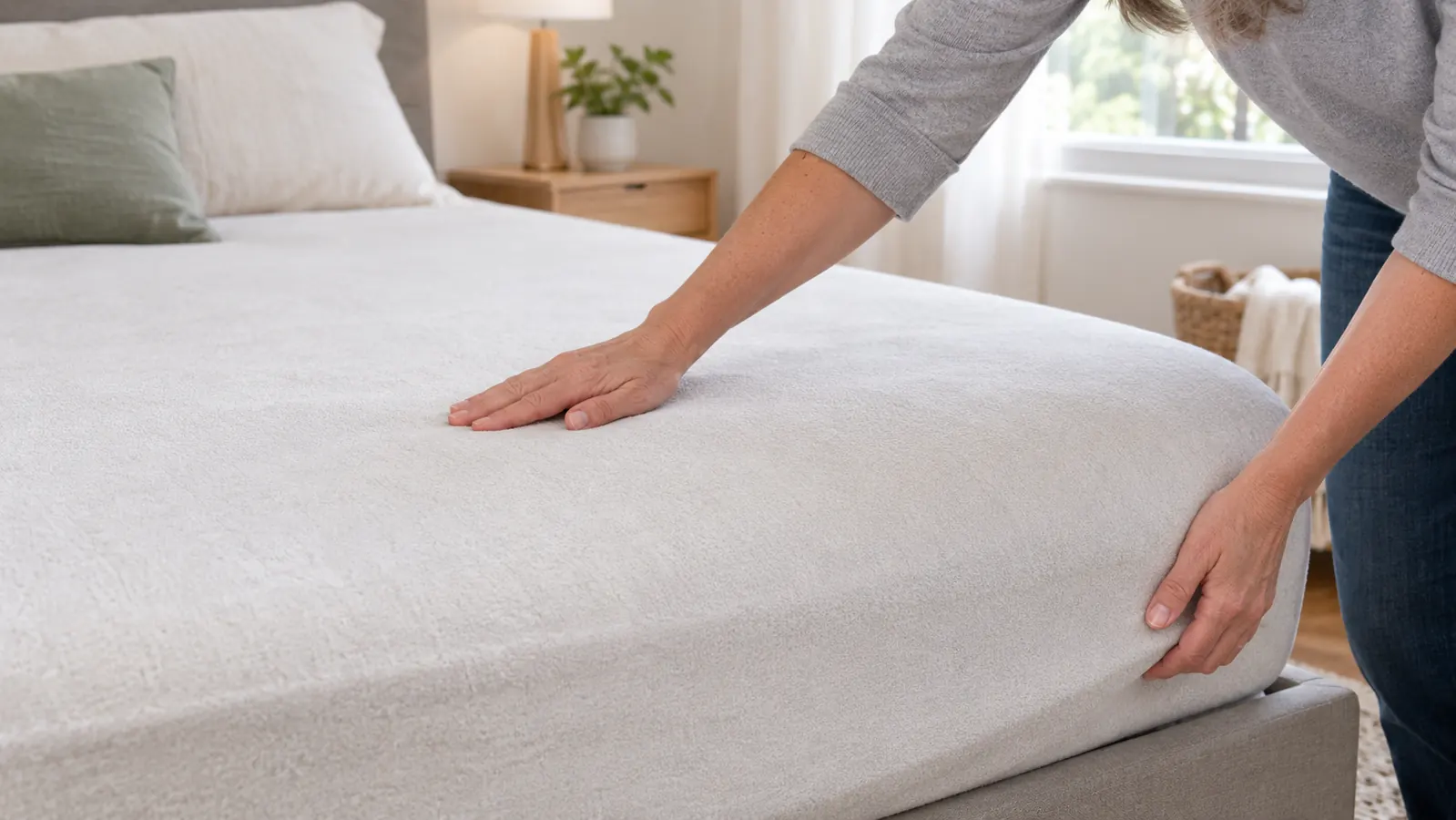
This is the section where I can give you observations instead of adjectives. Otis weighs 68 pounds and hits the bed from a standing drop at least twice a day. The foam slab under the cover is the main support, and after six months it still bounces back. When he gets up, the surface returns to level by the time I walk from the kitchen to the living room. There is no permanent hollow where he sleeps, even though he favors the corner closest to the fireplace. I press the center of the bed the same way I did on day one, and it still gives a little and then stops. It is not a cloud and it is not a board. It is a firm, supportive surface that has not turned into a pancake.
The behavioral changes matter more than my thumb. In January, Otis favored his right hind leg for the first few minutes of every walk, and he sometimes paused at the bottom of the stairs. By April, with the caveat that the weather was warmer, he was trotting to the end of the block with less warm-up time. I cannot isolate this bed as the only reason. He also gets a joint supplement, and I shorten our walks when the sidewalks are icy. What I can say is that he chooses this bed over a cold floor, and a dog who rests on support instead of hardwood is not working against his own joints while he sleeps.
One thing I have learned from older dogs is that comfort is not the same as softness. A soft bed can feel lovely for five minutes and then leave a dog struggling to hoist himself up. The Bedsure foam is firm enough that Otis can push himself out of it without rocking back and forth. He still moves slower after a long nap, but he does not have to fight the bed. That matters more to me than anything printed on the box.
The Cover: Washing, Reassembly, and the Zipper
The removable cover was the deciding feature for me, because I have owned the alternative. A bed with a sewn-on cover eventually starts to smell no matter how carefully I spot-clean it, and a heavy shedder like Otis puts a surprising amount of fur into a bed in a single week. The Bedsure cover zips off completely, goes into the washer on cold, and dries on low without shrinking. I have washed it thirteen times in six months. After the first wash I expected pilling on the top surface where Otis digs, but there is none. The stitching at the corners is still tight, and the zipper still works, although it catches on the fabric edge at one corner unless I hold the cover flat while I pull.
My washing routine is simple. Every other week I take the cover off, turn it inside out, and wash it on cold with a small amount of detergent. I dry it on low heat and put it back on the foam core while it is still slightly damp, which helps the cover smooth out. The whole job takes about ten minutes of active time. The one warning I will give is that washable does not mean waterproof. The foam core has never been in the washing machine because it should never go in the washing machine. If your dog is a puppy or has bladder issues, put a waterproof pad between the dog and the bed. That is a small workaround, and it is worth doing.
Where It Holds Up and Where It Does Not
The test I did not plan for came in February. Otis came in from a snowstorm with wet snow and road salt on his belly, and he lay down on the bed before I could grab a towel. I thought the cover would look stained forever. It did not. After the next wash, the fabric looked the same as it did the day it arrived. The base has also stayed flat and square, which is more than I can say for the bed it replaced. He has never once slid off the edge, and the stitching has not popped even on the corner he uses to launch himself.
The drawbacks are small but real. The zipper is the first one. It catches at the corner if I rush, and I have to align the fabric before pulling. Once I figured that out, it stopped being a problem. The second is that the bed is firm. If your dog is used to a plush, loosely filled pillow, he may not take to this bed right away. Otis did, but he also likes sleeping on a folded blanket, so he is not picky. The third is the size chart. Beds are sold by dimensions, not by the dog's weight alone, and an orthopedic bed only does its job if the dog fits on it. Measure your dog before you order.
What I Liked
- Foam core still feels firm after six months of daily use by a 68-pound dog
- Full removable cover has survived thirteen washes without pilling or shrinking
- Non-skid bottom stays in place on hardwood floors even when the dog jumps onto it
- Otis chooses this bed over the couch and the carpet
- Simple construction with no unnecessary extras to break or clean
Where It Falls Short
- Zipper catches at one corner if you rush it
- Cover is washable but not waterproof, so the foam core needs protection for accident-prone dogs
- Firm surface is not right for dogs who want a plush, sink-in nest
After six months and thirteen washes, the foam still springs back almost as soon as Otis gets up. That is the test that matters.
Alternatives I Considered
I did not buy the first bed I saw. I looked at a memory foam bed from a brand my neighbor uses, but the cover on the model in my budget was not removable, and a bed I cannot wash is a dealbreaker in this house. I also looked at a washable crate pad that was easy to clean but too thin to lift a heavy dog off a cold floor. The cheaper mats I considered were tempting until I reminded myself that the bed I was replacing had been one of those cheaper mats. I had already paid once to learn that lesson.
Bedsure won because it was the middle path. The cover came off, the foam stayed firm, and the bed was built without unnecessary extras I would have to clean around. I also liked that the brand did not oversell it. The listing said orthopedic, washable, and supportive, and that is what arrived. Six months later, the bed is still doing those three things. In a category full of claims, that is the best praise I can give it.
Who This Is For
Buy the Bedsure orthopedic bed if you have a dog who is no longer young and you have noticed him taking longer to stand up. Buy it if your current dog bed has gone flat, because a flat bed is basically a rug, and a dog who sleeps on a rug is not getting support. Buy it if you are the person in the house who does the laundry, because the removable cover is the feature you will appreciate most. I wash this cover more often than I wash some of my own clothes, and I do not resent it the way I resented scrubbing the old sewn-on cover.
Buy it if your dog is a shedder. The cover vacuums well and washes well, and no amount of fur is going to ruin it. Buy it if you have hardwood floors, because the non-skid base matters more than you would think. Otis is not graceful, and this bed has never slid out from under him. One caveat before you click: if your dog has started limping, crying when he gets up, or refusing stairs, talk to your veterinarian before you spend money on any bed. A good bed supports an older dog, but it does not replace a diagnosis.
Who Should Skip It
Skip this bed if you need a waterproof surface. The cover is washable, not waterproof, and while I have not had an accident on it, the foam core cannot go in the washer. A puppy or a senior dog with incontinence needs a different setup. Skip it if your dog has destroyed every bed he has ever met. No orthopedic bed is chew-proof, and this one is no exception. I would not hand it to a determined chewer and expect it to survive unattended.
Skip it if you want a cloud-soft nest. The Bedsure foam is intentionally firm. It gives, then it stops. Some dogs prefer to sink into a plush bed, and if that is your dog, he will let you know by sleeping everywhere except on the new bed. And if you cannot be bothered to measure the space and your dog, keep shopping. The right size is half the battle, and blaming the bed for a wrong size is not fair to the bed.
My next bed will be another Bedsure. That is the easiest way to sum up six months.
Check today's price and available sizes on Amazon. Measure your dog first, then order the size that fits.
Amazon Check Today's Price on Amazon →