
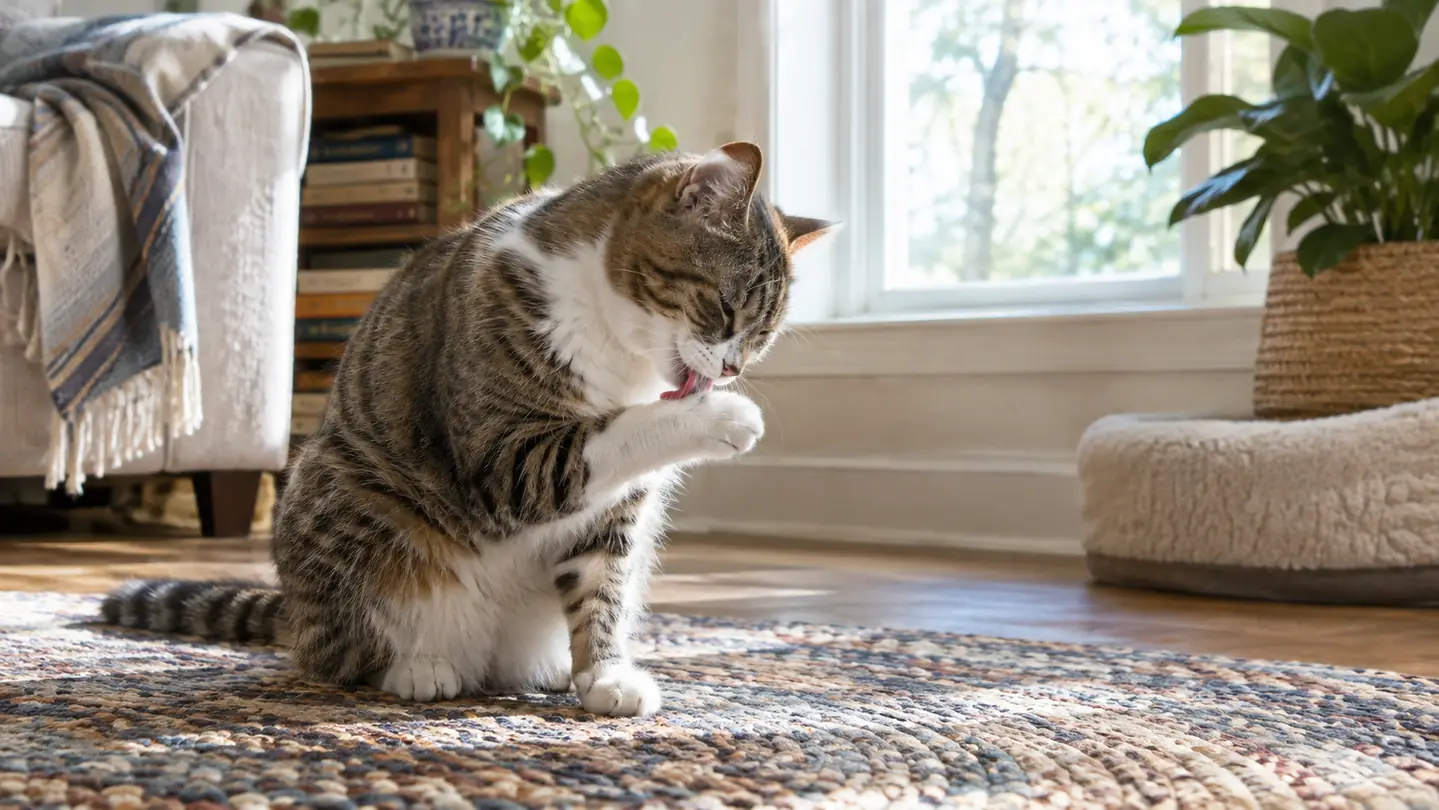
You know the sound. It starts as a dry, heaving cough at the back of a cat's throat, and the cat looks at you with a worried squint, and you know a hairball is coming whether you enjoy the moment or not. Last winter my indoor cat produced a round of them about every ten days. Each one meant an hour of her hiding under the bed and me reaching for a paper towel on the hardwood, but the mess was the least of it. The fur was sitting in her stomach long enough to build up, and a stomach full of fur does not feel good to anybody.
Pepper is five, an indoors-only shorthaired tabby, and she grooms all day because there is not much else to do in a two-bedroom house. At her checkup last fall the veterinarian was not alarmed, but she was not dismissive either. Indoor cats shed year round, she reminded me, and all that loose fur has to go somewhere. Her advice came in two parts: brush Pepper more, and swap the daily treat for Greenies Feline Smartbites Healthy Indoor Cat Treats, which are made with fiber meant to help hair keep moving through the digestive tract. That is the short version of how the bag reached my counter, and it is the short version of how I built the routine I am about to walk you through.
By the numbers, nothing about our situation was extreme. One hairball every ten days is not an emergency, and I am not going to pretend it was. But it was frequent enough that the sound of Pepper starting to cough sent me across the room, and frequent enough that I wanted a system instead of a wish. What follows is the exact system, in the order it matters most.
Make the daily treat do real work for an indoor cat
Greenies Feline Smartbites are soft, chicken-flavored treats built around the problem of swallowed fur. I gave Pepper one in the afternoon and one after dinner, and the routine I settled on is broken down step by step below.
Amazon Check Today's Price on Amazon →Step 1: Swap the treat jar, one Smartbite at a time
The first change is the easiest, because you are not adding a new chore to your day. You are replacing the treat your cat already expects with one that does something for the hairball problem while she enjoys it. I emptied the old crunchy stars out of the jar and put the Greenies Smartbites bag in the same spot on the counter so nothing about the daily ritual had to change.
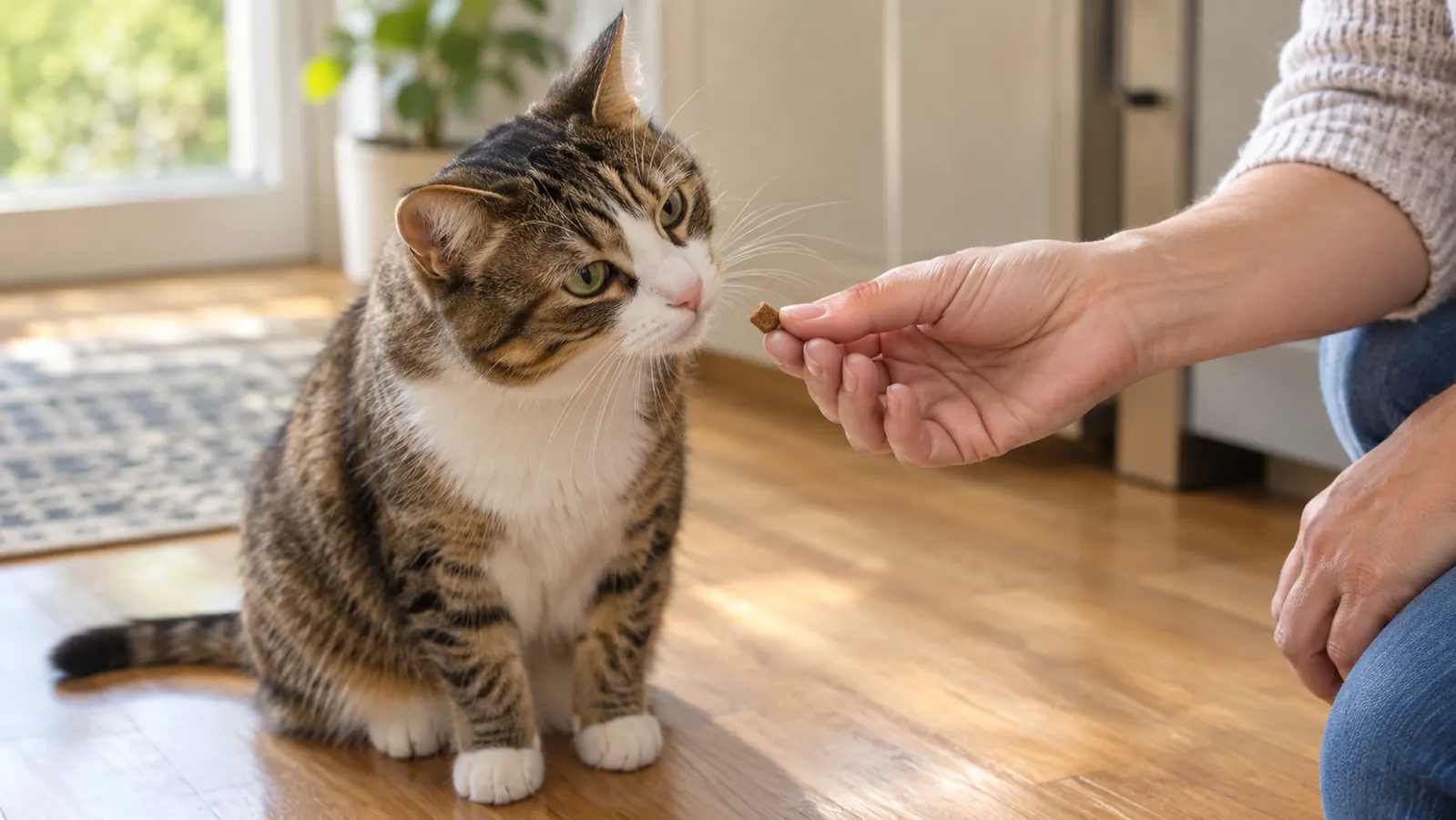
I did not pour a handful into her bowl on day one, and I will tell you why. Pepper is a fussy eater, which is a polite way of saying she walks away from food she has decided is wrong, and treats are the one thing she approaches with trust. I offered a single Smartbite from my fingers and let her sniff it first. She took it, chewed it twice, and looked at me for another. That was day one.
The serving suggestion on the bag is based on your cat's weight, and for a small adult like Pepper the recommendation was more than she needed. I stayed at the lower end and split the daily amount into two moments, afternoon and evening, because Pepper will eat any snack in one sitting and then be done. Two small moments worked better than one larger pile, and it gave the routine two anchors in the day instead of one.
A note on picking the flavor: the chicken Smartbites were the only version I tried, because Pepper has never once accepted a fish treat and I was not about to test her patience. If your cat already has a favorite among the Greenies line, use that one. The hairball benefit comes from the recipe, not the flavor, and a treat she refuses helps nobody.
Step 2: Brush for five minutes before the afternoon treat
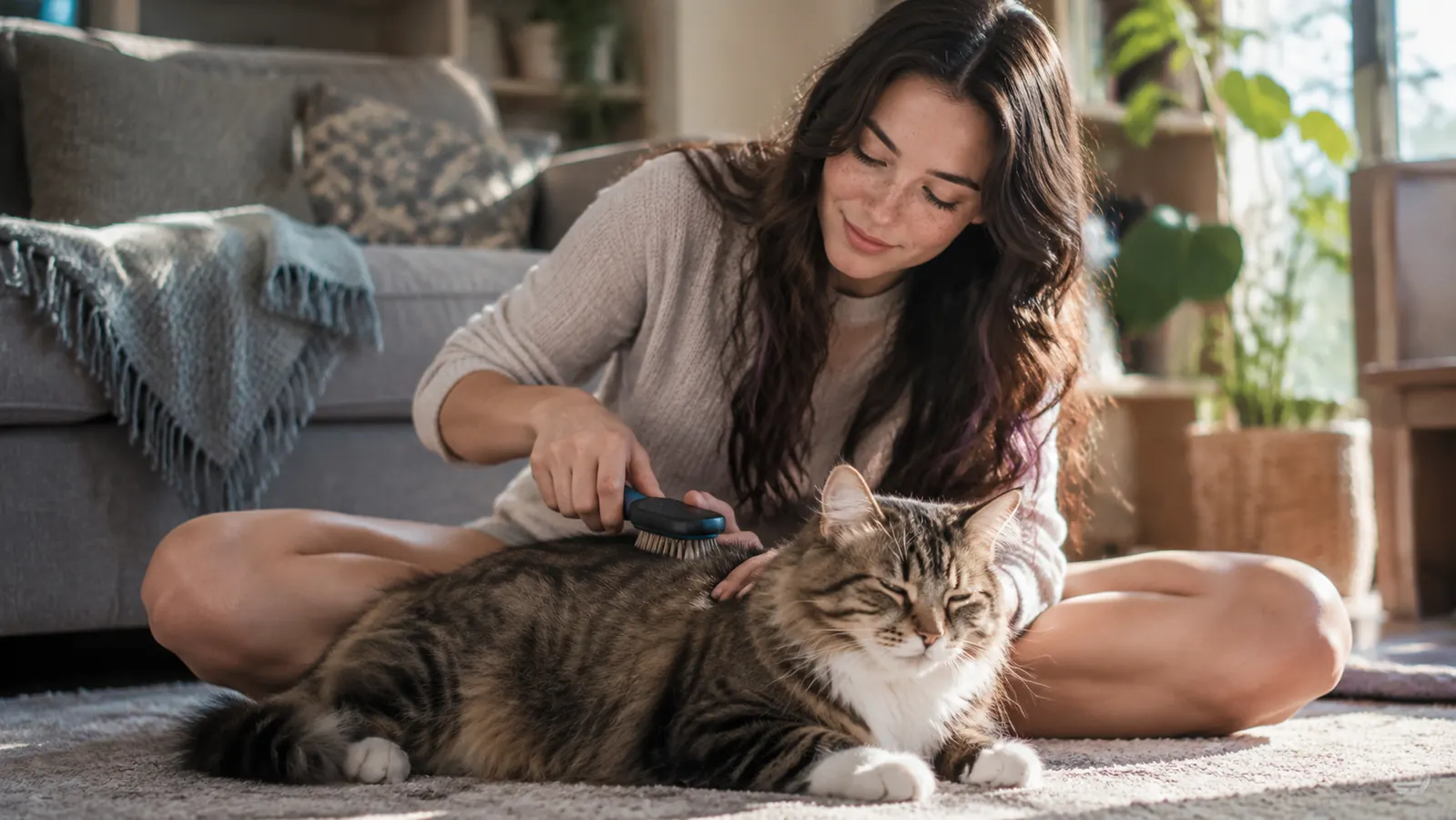
The Smartbite helps move hair that is already inside her. Brushing does something better: it stops some of that hair from ever going in. The fur that ends up in a hairball is loose undercoat a cat pulls off with her tongue, and anything you lift with a brush is fur she will not swallow. I use a soft slicker brush and keep the sessions short, because Pepper has opinions about being groomed.
I sit on the floor in the afternoon sun, brush her from head to tail in the direction the fur lies, and spend extra time on her sides and the back of her legs because those are the spots she works hardest when she washes. The wad of fur that came off on the first real session looked like a second small cat. It was gross, and it was exactly the point. That fur was on its way to her stomach, and instead it landed in the trash.
If your cat will not sit for a brush, start with two minutes and hand over the Smartbite when the brush goes down even if you only got a few strokes in. Pepper treated the whole operation as a negotiation for the first week. What helped was letting her sniff the brush before I used it and holding the session in the spot where she already relaxes. For her that is the top stair in the afternoon light.
Step 3: Give the evening Smartbite after dinner, with water nearby
The second Smartbite anchors the other end of the day. I give Pepper hers after her dinner bowl is down, while she is still in the kitchen and still feeling good about food. A cat learns a daily rhythm fast. After the first week she started waiting by her bowl at the same time every evening, and a routine the cat enforces itself is a routine that does not get skipped.
The part people forget is water. Fiber does its work only when the cat is drinking enough, and indoor cats are famous for not drinking enough. I switched Pepper to a wide stainless bowl that does not crowd her whiskers, and I rinse and refill it every morning so it tastes fresh. She drinks more from that bowl than she ever did from the old narrow one, and that change alone may matter as much to her hairballs as the treats do.
One more small adjustment: I moved the water bowl across the kitchen from her food dish. The vet mentioned that many cats would rather drink away from where they eat, and it cost me nothing to test. Pepper drinks more now, and more water means the fiber has something to work with.
Step 4: Watch the litter box for the real report card
The honest measure of any hairball routine shows up in the litter box, not on the calendar. Fur that makes it through the digestive tract comes out the other end mixed into the waste, and you will see it while you scoop. That fur used to come back up as a wet cough on the rug. When it starts arriving in the box instead, the routine is working.
I kept a tally on my phone for a month, one dot for every hairball I cleaned up. Before the change, Pepper sat at about three dots a month. By the third week I had one dot. By the second month the total was down to one, and that single hairball came after I skipped brushing for four busy days. The message was plain. The Smartbites and the brush each did a share, and together they did more than either did alone.
Give the routine a full month before you judge it. A hairball that appears on day two was already in the works the week before. Four consistent weeks tell you more than any single good stretch, and the litter box will give you that report without saying a word.
Step 5: Track the weeks between hairballs, and know when to call the vet
Here is the line I promised myself I would not cross with you. No treat, Greenies Smartbites included, turns a cat that vomits hair every week into a cat that never does, and a product that promises that is asking you to ignore what a vet would tell you. A hairball once a month or less is normal for an indoor cat that grooms. Hairballs every week, retching that produces nothing, or a cat that stops eating, any of those is a vet conversation, not a bigger bag of treats.
I brought the topic up at Pepper's spring appointment and told the vet how often I was still cleaning up hairballs. The number landed in a comfortable range, and we talked about what else matters for a cat that lives entirely indoors. Weight is the larger fight, she said, and treats are real calories. I trim a little kibble on the days Pepper gets her Smartbites so the treats do not show up on her ribs.
Keep the record simple. If you track only one thing, track the weeks between hairballs. That single number told me the routine was earning its place, it gave the vet something concrete at the appointment, and it will tell you the same story. Once a month or better, keep going. Worse than that, add brushing time and check the water bowl first, and if two more weeks do not change the count, the vet is the next step.
What Else Helps
Three smaller things made this routine last in our house. The first is that the Smartbites bag lives in open sight on the counter. If I cannot see it, I will skip a day, and a skipped day is fine once and becomes a habit if you let it. The second is that Pepper eats her dinner in the mudroom where Otis, my 68-pound Labrador mix, is not allowed to hover. Less stress around food means a steadier meal.
The third is patience with the process instead of pressure on the cat. Pepper did not become a cat that sits still for brushing overnight, and some days she still talks back to the brush. The routine works because it is a routine, not because I have any special talent with cats. I am just someone in Green Bay who was tired of scrubbing the hardwood, and a daily Smartbite plus a five minute brush got my floors back to normal.
What I would add honestly: the Smartbites have not ended hairballs completely in this house, and I have not found a product that honestly could. What they did was drop the frequency from three a month to more like one, and that is a change I can measure, clean up less often, and live with.
The fur that used to come up as a wet cough on the rug now shows up in the litter box where it belongs. That is the whole goal, and the litter box tells you the truth without saying a word.
If hairballs are a weekly event at your house, give the routine a full month
One daily Greenies Smartbite, five minutes with a brush, and a water bowl the cat actually uses brought Pepper from three hairballs a month down to about one. Check today's price on Amazon and see whether your cat agrees with her math.
Amazon Check Today's Price on Amazon →