
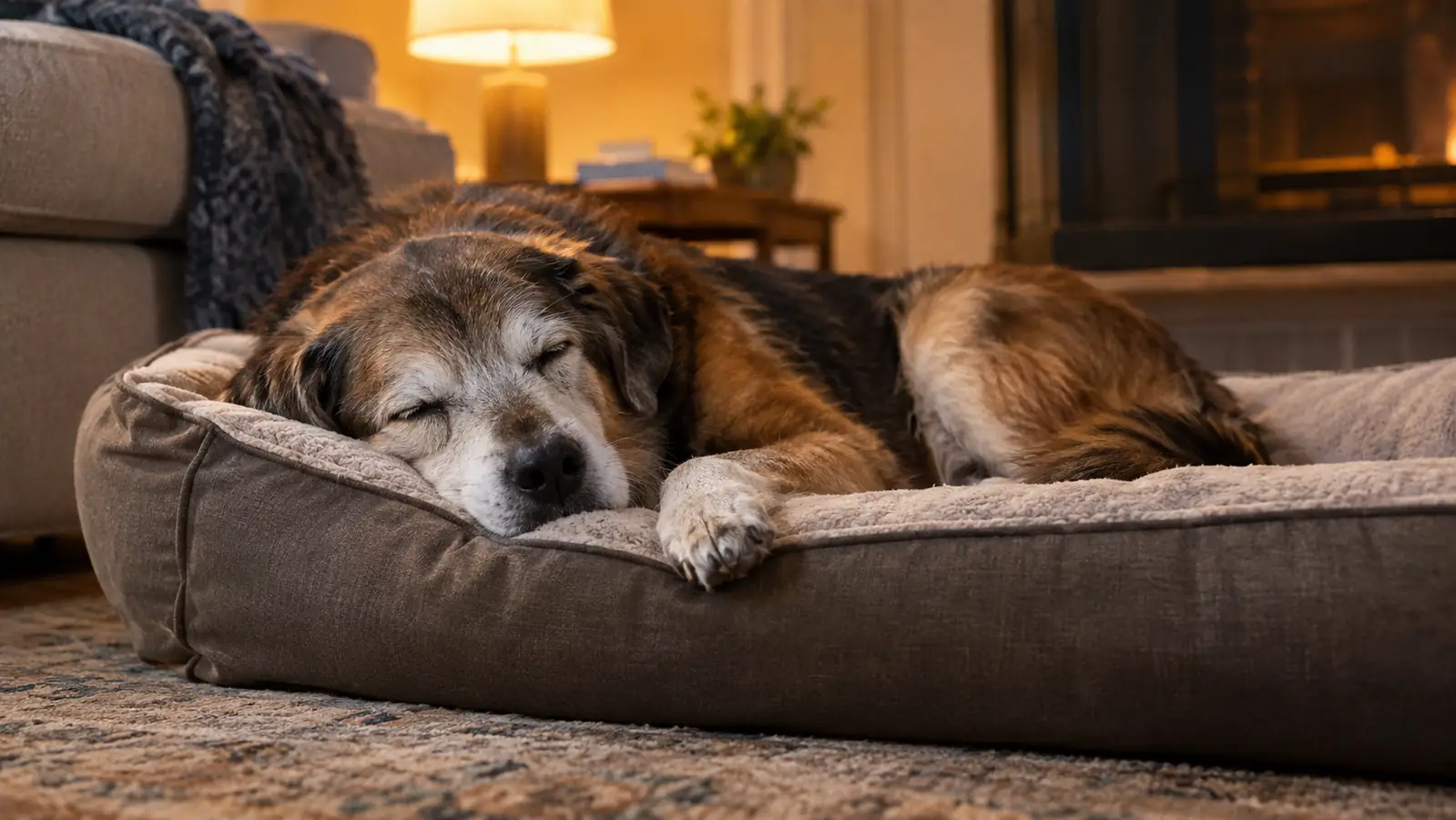
I first noticed Otis was not sleeping well on a Tuesday night in late September. He stood in front of the living room sofa, front paws up on the cushion, back legs refusing to push. I helped his rear end up, he circled twice, and about twenty minutes later he climbed down and lay on the hardwood floor with a sigh I now recognize as surrender. He was choosing a hard surface because the cushioned one let his hips sink in a way that hurt, and I had been too busy to see that clearly.
Over the next ten weeks I tested four dog beds, adjusted our evening routine, and kept a notebook on every restless night. The plan that worked is below, and the bed I came back to is the Bedsure Orthopedic Dog Bed. None of this is complicated and none of it replaces a vet. It is simply what helped my seven year old dog go from waking three times a night to sleeping through until morning, and I think it can help your senior dog too.
Start with the right surface, not the most expensive one
A supportive orthopedic bed removes the first reason an older dog gets up at 2 a.m.: pressure on stiff joints. The Bedsure model in this guide is the bed I came back to after ten weeks of testing, and the five steps below walk you through every part of the routine.
Amazon Check Today's Price on Amazon →Step 1: Rule out pain before you buy anything
The first thing I did was call the vet, not browse for beds. Otis was only seven, so I had assumed his stiffness was normal aging, but a sudden change in his sleep felt like a signal. Our vet watched him trot down the hallway, felt along both back legs, and found mild arthritis in the knees. We adjusted his pain plan, and only then did I start testing beds. If your dog starts pacing at night, panting while lying down, or avoiding his usual spot, get medical input before you change the furniture. A bed is not treatment, and an older dog with an untreated tooth, ear infection, or joint flare will not sleep better no matter what mattress you buy.
What the vet visit changed was my goal. I stopped looking for the softest bed and started looking for support. Otis was not choosing the hardwood because it was comfortable. He was choosing it because a soft bed that let his hips sink too far put extra strain on his arthritic knees. A useful orthopedic bed keeps the spine level and lets the dog settle without bottoming out. Once I understood that, every other decision became easier.
One more note from that visit: I asked the vet how to tell if a bed was helping. Her answer was simple, watch where the dog chooses to spend the first hour after a walk. When Otis headed to the orthopedic bed instead of the floor, I knew the surface was doing its job. Choosing to sleep somewhere is the most honest vote a dog can cast.
Step 2: Measure the dog, not the room
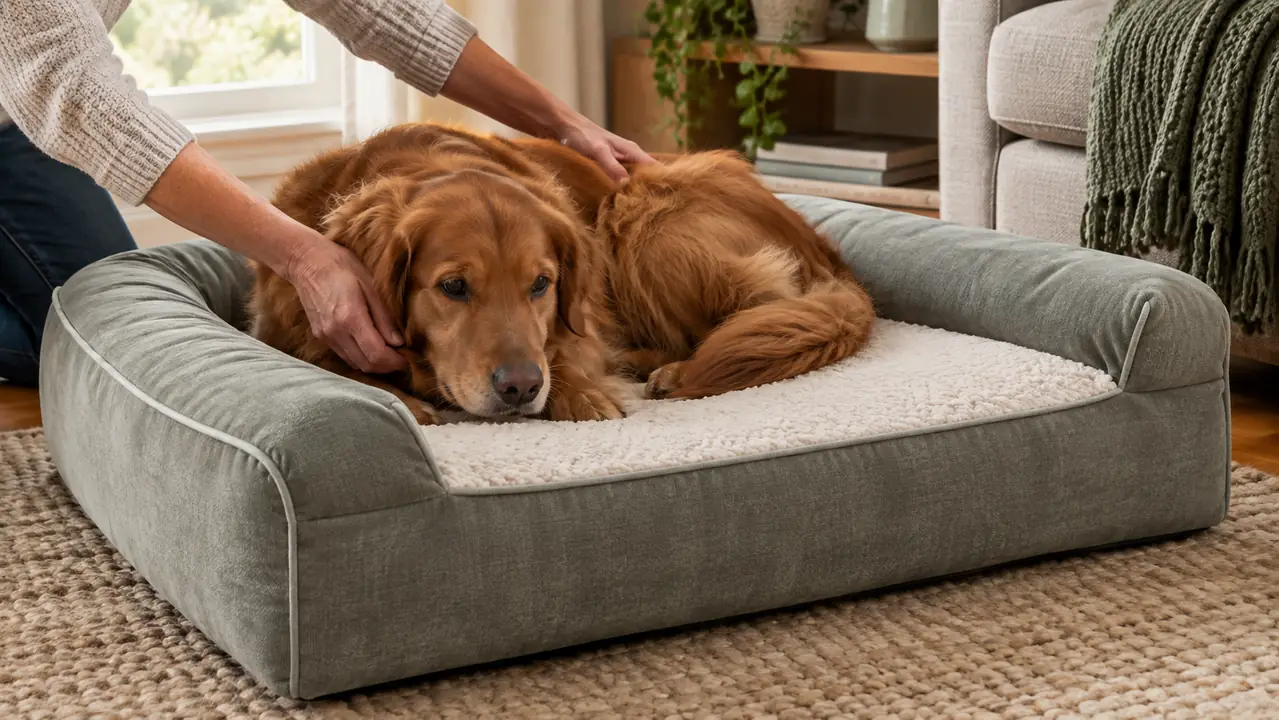
This is the step most guides skip, and it is the reason many beds end up in the garage. Dogs sleep better when the bed is sized to their body, not to the corner where it will live. I learned that with a huge round pillow that Otis refused because he could not find a firm edge to put his head on. The Bedsure model at the center of this article is the small dog version, and it is the right call for dogs that weigh around twenty pounds or less. If your dog is bigger, order the equivalent Bedsure orthopedic bed in a larger size. The bed should be a few inches longer than your dog from nose to tail, and wide enough for him to stretch out without hanging off the edge.
Do not trust the label small breed. A 25-pound beagle needs more surface than a 12-pound chihuahua, and a deep-chested dog needs more length than a barrel-shaped one of the same weight. Take a cloth tape measure, ask your dog to stand, and measure from nose to base of tail. Add four to six inches for sprawl, because senior dogs often stretch out to change positions and need room to do it.
If you are choosing between two sizes, choose the larger one. Senior dogs lose muscle, and the extra few inches of firm foam give them room to shift their weight without slipping off the edge in the middle of the night. The small Bedsure bed in this guide fits that rule for a dog in the small weight range, and the bigger line handles the rest.
Step 3: Put the bed where the dog already sleeps
The first time I bought an orthopedic bed for Otis, I placed it next to my side of the bed because I wanted him close. He ignored it for four days. Then I moved it to the corner of the living room where he had been sleeping on the floor, and he climbed in within the hour. Older dogs are creatures of routine, and their sleep spots are tied to smell, sight lines, and habit. Put the new bed exactly where your dog already chooses to lie down when he is tired, even if that spot is in front of a heater vent or in the busiest corner of the house.
If your goal is to get the dog to sleep in your bedroom at night, move the bed gradually. Shift it a foot toward the bedroom every night for a week so it does not feel like a brand new location. I also put a worn t-shirt of mine under the cover for the first three nights. The familiar smell does more than any spray, and it costs nothing. The bed needs to become the dog's obvious place, not an unfamiliar piece of furniture he is supposed to trust.
I also stopped letting Otis spend every evening collapsed on the sofa. I know it is tempting, and I still let him put his head in my lap for company, but the couch is too soft for him now. When sleep time comes, I move him to the orthopedic bed rather than letting him doze all night in the dip. It felt harsh for one week, then it just became the new normal.
Step 4: Build a short wind-down routine that ends on the bed
A new bed alone will not fix a restless night. The nights Otis slept best followed the same quiet pattern: a slow final walk, a five minute massage, and very little talking afterward. Ten minutes before lights out, I take him outside one more time, walk him to the bed, and run my hands along his back legs and hips. It is not professional massage. It simply asks his body to switch out of alert mode. If your dog is small enough for the Bedsure model in this guide, do the same routine there, and the ritual matters more than which size you choose.
Keep the routine short enough to repeat every night. If your dog expects twenty minutes of massage, you will skip it on busy nights and the habit will not form. I use the same three steps in the same order and keep my voice low. The arthritis will not disappear, but predictability is real medicine for an old dog's nervous system. He starts to relax the moment the evening walk ends because he already knows what comes next.
If your dog still wakes at 2 a.m., do not give him a snack. I made that mistake once with Otis, and it turned a bathroom trip into a 2 a.m. feeding habit that lasted three weeks. Take him outside on a leash with no conversation, put him straight back on the orthopedic bed, and let the routine itself become the cue to return to sleep.
Step 5: Keep the bed clean and check the foam twice a month
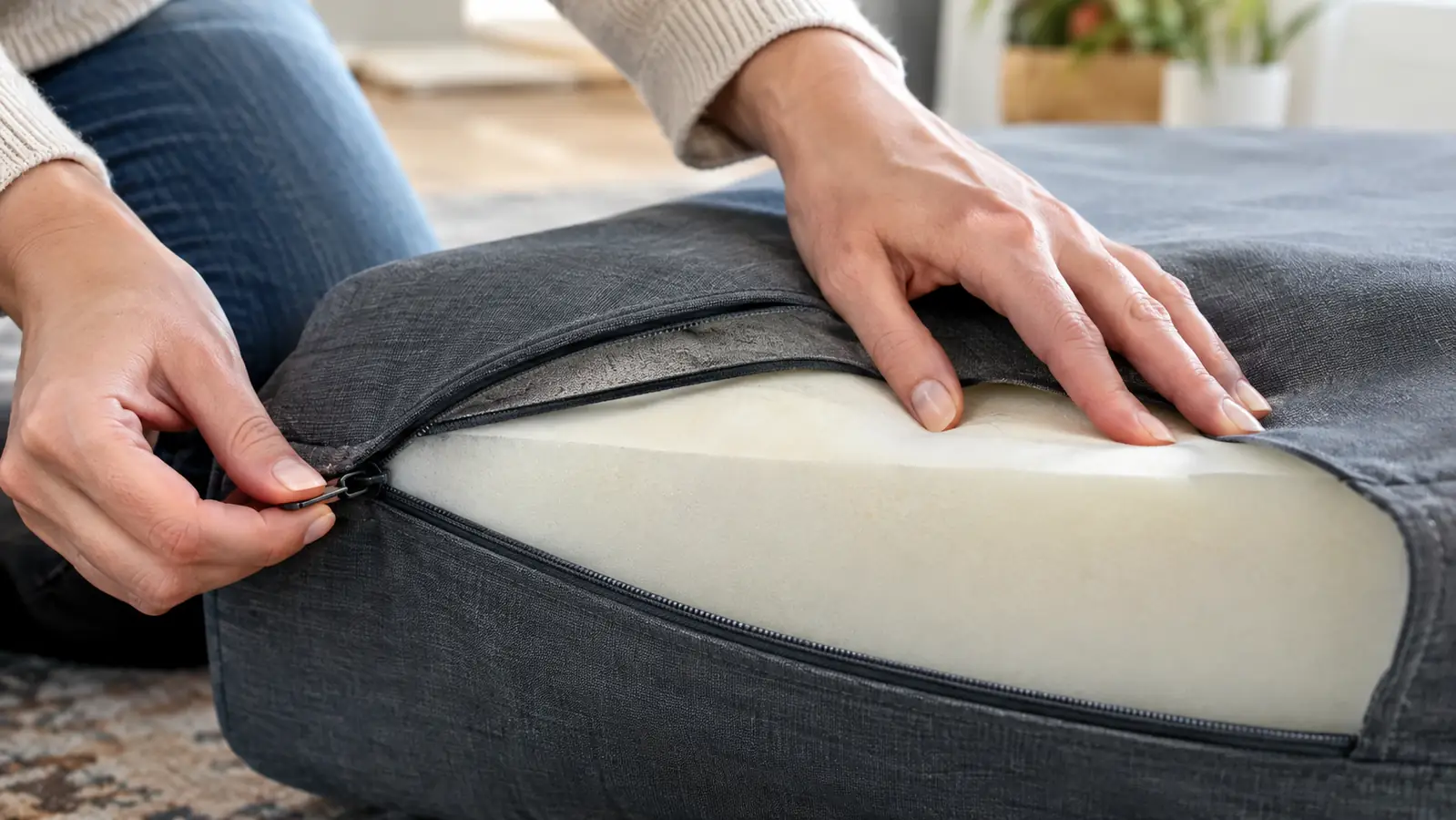
The reason I kept coming back to Bedsure was the washable cover. Otis sheds enough to fill a small pillow every week, and after the first week I realized I would not keep a bed clean unless washing was easy. This Bedsure orthopedic bed has a cover that comes off, goes in the washing machine, and goes back on, which is exactly what a senior dog needs. Skip any bed that says spot clean only. You will not do it often enough, and a bed that smells stale stops being a place the dog wants to settle.
Once a month I unzip the cover and press my hand into the foam in three or four places. What I am checking for is a dent that stays after I lift my hand. Foam has a lifespan, usually two to three years of daily use, and once there is a permanent hollow where the hip rested, the bed is hurting more than helping. A worn bed lets the dog sink into the low spot and wake up stiff, which is the opposite of what we are trying to do. Put the foam check on your calendar with your other monthly chores.
How do you know it is working? You start seeing the dog settle faster. Before the Bedsure bed, Otis would circle for five minutes and readjust every hour. Now, most nights he curls up within a minute, and when I check on him two hours later he is in the exact same place. That stillness is not something I expected, but it is the most reliable sign I have that the support is right.
What Else Helps Besides the Bed
For Otis, three changes made the orthopedic bed work better. First, we wiped his paws and belly after his last walk so he did not climb into bed damp and cold. Second, we stopped letting him jump down from the porch because landing hard right before sleep made him stiff overnight. Third, we placed his water bowl a few feet from the bed, close enough for a drink without fully waking but far enough that spills did not soak the cover. None of these cost anything, but together they cut his nighttime wake-ups in half.
Floor temperature matters too. An orthopedic bed sitting directly on a cold hardwood floor can feel cool underneath, and an old dog will move away from the chill. Slip a yoga mat or a folded quilt under the bed to block the cold. It is not pretty, but when we tested it in November, Otis slept noticeably longer on the nights his bed sat on an insulating layer.
One more thing I recommend with an older dog is a small mat next to the bed. We put a washable runner under Otis's head area for drool and for nights when he wants the colder floor for a few minutes. The mat stays clean after a warm water rinse, so the bed cover does not end up in the washer every other day.
Otis was not choosing the hardwood because it was comfortable. He was choosing it because a soft bed that let his hips sink too far put extra strain on his arthritic knees.
Give your dog comfortable sleep a real chance
You have the routine. The only missing piece is a bed that supports an older body instead of swallowing it. If your dog fits the small size, this is the Bedsure orthopedic bed I kept after ten weeks of testing. If your dog is larger, look for the equivalent size in the same line.
Amazon Check Today's Price on Amazon →