
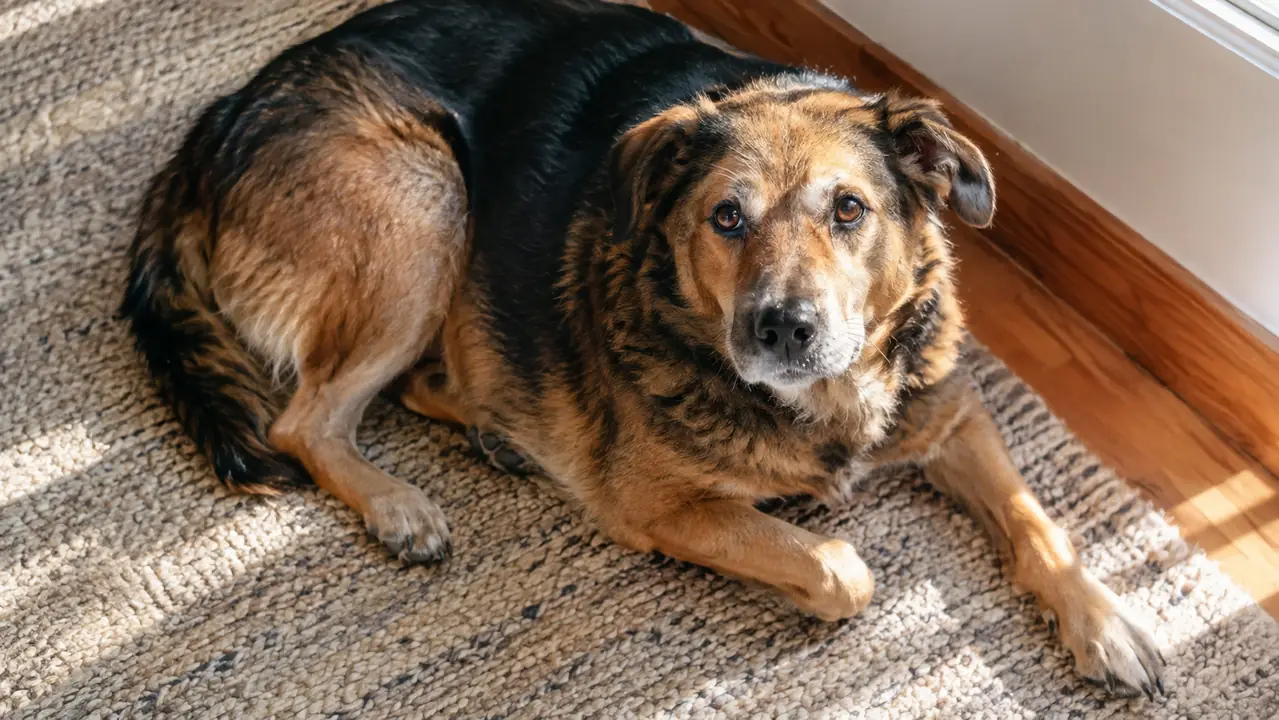
If your house smells like a kennel no matter how much you scrub, the problem usually is not your cleaning. It is the residue left behind. I learned that the hard way with Pepper's litter box misses and Otis's accidents during a long February thaw in Green Bay. I would reach for whatever spray sat under the sink, and the spot would look clean for a day. Then the smell came back, stronger than before, and visitors with dogs would stop mid-sentence and look around. Set-in pet stains are not just about the mark you can see. The urine soaks into carpet padding and wood grain, and if you do not break down the proteins, you are only pushing them deeper.
I am Corinne Deitz, and this is the method I now use on the upstairs hallway carpet and the hardwood by our mudroom. It starts with a 32 ounce bottle of Rocco & Roxie Supply Co. enzyme stain and odor eliminator, the brand my vet recommended and the one I bought after reading over 127,000 Amazon reviews. That review count alone does not make it right for every mess, but it does mean thousands of people have lived with it on real carpets and real upholstery. This guide walks through how I take a stain that has sat for days or weeks, the kind everyone calls set in, and lift it out without ruining the floor underneath.
Keep the right cleaner where accidents actually happen
Rocco & Roxie Supply Co. enzyme stain and odor eliminator comes in a 32 ounce spray, which is big enough for a whole season of dog and cat messes. If you live with a senior dog or a cat that misses the box, this is the bottle to keep in the mudroom.
Amazon Check Today's Price on Amazon →Why enzymes work where bleach and vinegar fail
Set-in urine is not one puddle. It is a stain on the surface, a wider band in the carpet backing, and then a rough circle on the padding or the wood below. Bleach removes surface color and kills some bacteria, but it does not travel down through the pile. Vinegar changes the pH briefly, and the odor returns when the carpet dries because the uric acid crystals are still there. Enzyme cleaners work differently. The live enzymes in Rocco & Roxie Supply Co. break the protein and uric acid in dried urine into small pieces that can be rinsed away or left as harmless residue.
The first time I truly believed that was with a spot near the baseboard in the upstairs hallway. Otis marked that corner in early February while I was carrying groceries from the car, and I did not notice until the next morning. I cleaned it twice with dish soap and warm water, and it still drew him back to the same corner every single time he came upstairs. After one thorough enzyme treatment, I had to remind myself the spot had ever been there. He has not returned to that corner since March, and that is the real test for an odor remover.
Step 1: Blot the mess, then mark it with a piece of tape
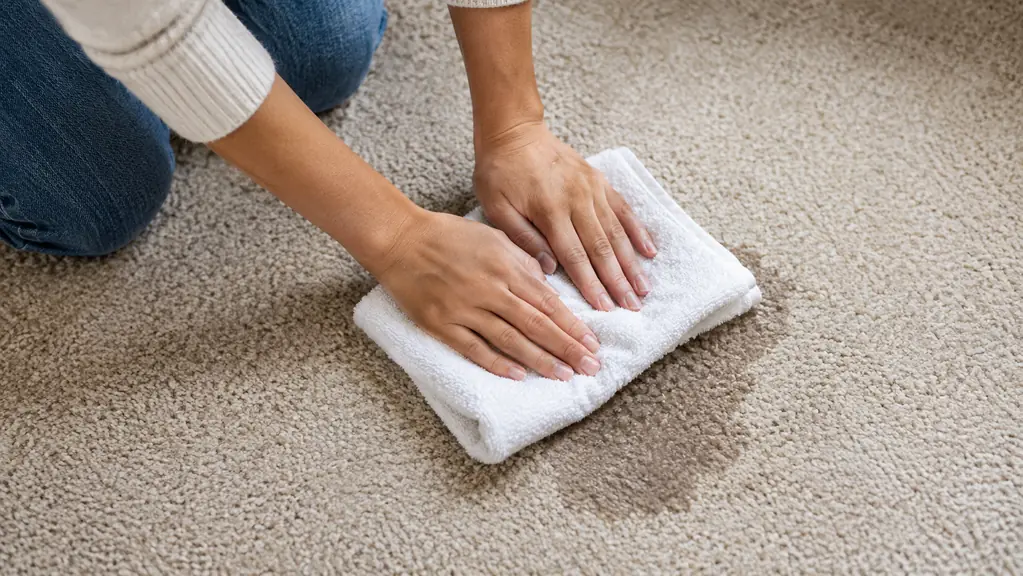
If the stain is still wet, your first job is to remove as much liquid as possible. Lay a thick stack of paper towels over the spot and press down with the flat of your hand. Do not rub or scrub, because scrubbing pushes urine sideways into the carpet fibers and makes the stain larger. Replace the paper towels until they come up almost dry. I pressed on Otis's corner spot for a full two minutes before I set down the enzyme cleaner, and that alone stopped the odor from spreading another few inches into the hallway.
For a stain that has already dried, skip the paper towels and go straight to marking the edges. I use a small piece of blue painter's tape at each corner of the visible spot so I know exactly where the soiled area ends. In dark hallway light, dried urine can be nearly invisible, but a black light will show the true border. I bought a ten dollar black light on Amazon after that February incident, and it showed me that the spot I could see was less than half of what the enzymes needed to treat.
Step 2: Test for colorfastness and open a window
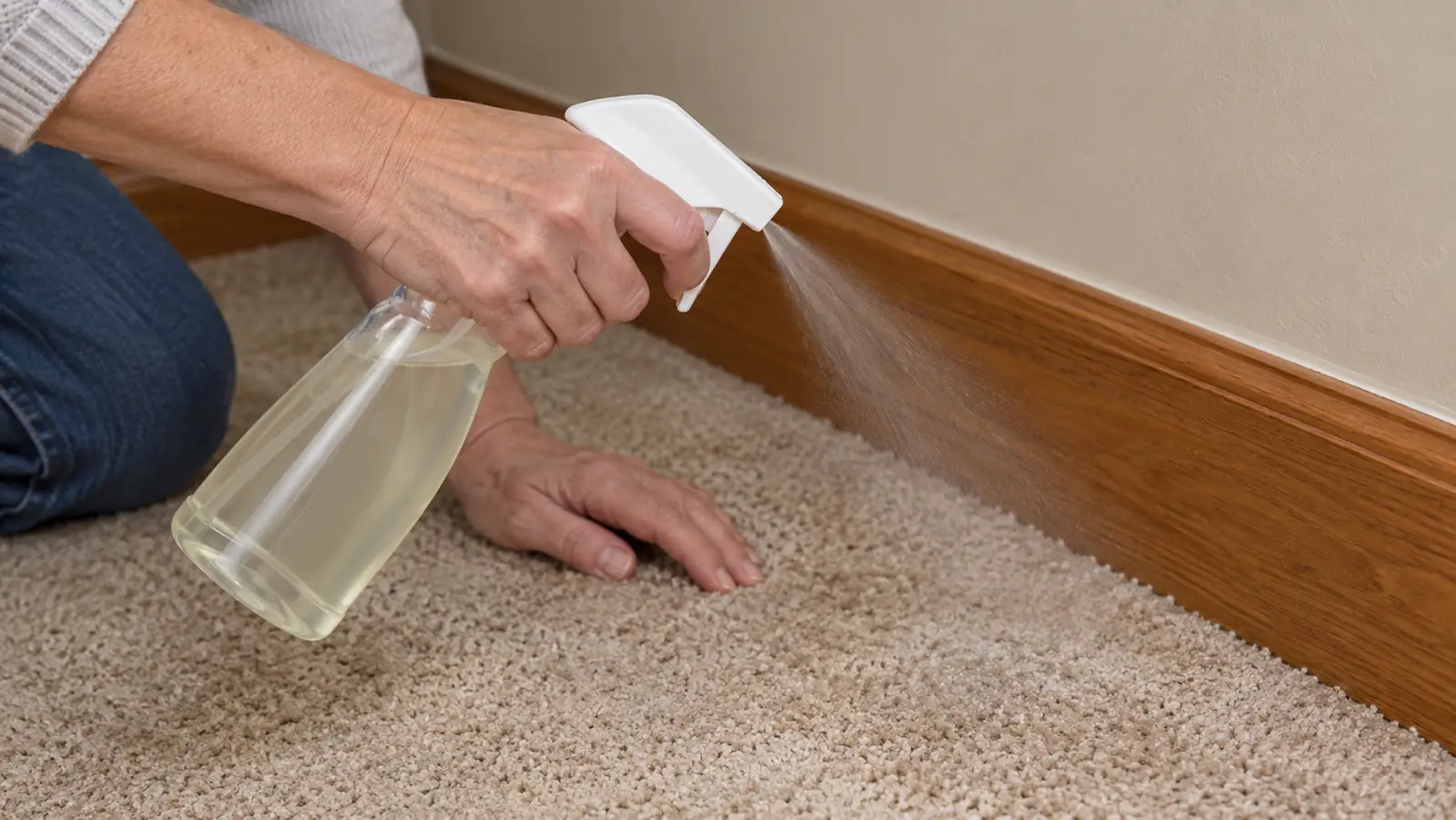
Enzyme cleaners are mild, but I still test any new carpet or upholstery in an out of sight place before I soak a large area. I press a clean white cloth wet with the Rocco & Roxie Supply Co. cleaner onto the back of a closet carpet for sixty seconds, then check whether any color transfers to the cloth. On my upstairs carpet, nothing came off. On a friend's wool rug, the same test showed a faint yellow tint, so we used a lighter hand and blotted sooner. Testing takes two minutes and can save you from a bigger problem than the original stain.
Open a window or turn on a fan before you saturate the carpet. Enzyme products need air and time to work, and the house will smell lightly of the product while it dries. I usually prop open the hallway window and close the bedroom door so Pepper does not wander through a wet floor. The smell is not harsh, but it is noticeable for the first few hours, and good ventilation keeps it from feeling like a science project.
Step 3: Saturate, do not just mist
This is the step most people get wrong. A light spray that only wets the surface will not remove a set-in stain because the enzymes never reach the urine sitting in the pad underneath. I aim the nozzle at the carpet, hold it two or three inches away, and press all the way down in slow passes until the area is visibly wet to the backing. For Otis's hallway spot, that took about thirty seconds of continuous spraying and felt like I was being wasteful, but the cleaner needs enough liquid to carry the enzymes down.
How do you know when you have used enough? Press the tip of your finger into the carpet. If the pad underneath feels wet and not just the top of the pile, you have saturated the right depth. If the top is wet and the pad is still dry, add more. This matters more for old stains than fresh ones because the urine has had weeks to work deeper into the layers. On hardwoods, I use a smaller amount and wipe with a towel because I do not want standing liquid on the seams, but the principle is the same: get the cleaner where the urine is.
Otis has not gone back to that corner in five months, and that tells me more than the way the carpet looked the day after I cleaned it.
Step 4: Let it dry slowly and do not rush it
The label on the Rocco & Roxie Supply Co. bottle says to let it air dry, and that is not a suggestion. The enzymes need time to keep digesting the uric acid, and anything that speeds up the drying process can stop them halfway through the job. I leave the saturated area alone for at least twelve hours. In February, I set a small box fan in the hallway on low, pointed at the wet carpet from across the room, and left it running overnight. The carpet stayed damp for most of that time, which felt wrong but is exactly what the product needs.
Do not cover the wet spot with a rug or let pets walk across it until it is fully dry. I kept Otis out of the hallway by closing the door at the top of the stairs for a day. When the carpet finally felt dry to the touch, I noticed that the dark edge of the old stain was gone, and there was no musty smell left behind. If you have to use the room before it dries, put a chair over the spot or lay a piece of plastic and a towel on top, but the longer you can leave it open to air, the better.
Step 5: Rinse with plain water, then vacuum when fully dry
After the enzyme cleaner has done its work, I go back over the area with a spray bottle filled with plain cool water, lightly misting just enough to rinse the surface. Then I blot again with a clean towel until the carpet is merely damp, not wet. This step removes any leftover enzyme residue before it can attract dirt. On the hallway spot, I noticed that the carpet stayed cleaner for longer after I started doing this rinse, because the enzyme solution itself can leave a slightly sticky film if you let it dry without rinsing.
Wait until the carpet is completely dry, usually another six to eight hours, and then vacuum slowly back and forth over the area. Vacuuming lifts the loosened residue and fluffs the carpet fibers back up. I do the same sequence on the hardwood by the mudroom, but I switch to a microfiber mop with warm water instead of spraying the floor directly. For wood, the key is to never let liquid pool around the seams, so I work in small sections and dry each one immediately. Hardwood presents a different challenge than carpet, but the Rocco & Roxie Supply Co. cleaner has been gentle enough on my sealed floors as long as I do not soak them.
What Else Helps Remove Set-In Pet Stains
An enzyme cleaner is the center of this method, but a few other tools make the difference between a spot that looks better and a spot that stays gone for good. I use a plastic carpet scraper to lift dried feces before I apply any liquid, because the enzymes work better when they can reach the fabric instead of sitting on top of a solid layer. I also keep a dedicated set of old white towels in the mudroom that I do not use for anything else. They let me see whether the stain is transferring during blotting, and they do not add dyes or fabric softener to the spot.
For stains that keep reappearing in the same place, I set a reminder on my phone to reapply the enzyme cleaner every four to six weeks, especially before the snow melts and Otis starts spending more time outside. The February hallway spot needed two treatments because it had been there long enough to soak into the pad. The first treatment removed the visible edge and most of the odor, but the second one, done ten days later, was what finally stopped Otis from sniffing the baseboard. If the smell comes back after a week, that almost always means the first application was too light or the area was dried too fast.
One more thing worth knowing: enzyme cleaners do not stay active forever once the bottle is opened. I write the date I open a new bottle on the side with a permanent marker and replace it after about six months even if there is still liquid inside. The living enzymes lose strength over time, and an old bottle will not remove a set-in stain no matter how long you let it soak. That simple habit has saved me from thinking my method stopped working when the real problem was an expired product.
Set-in stains do not have to be permanent
Rocco & Roxie Supply Co. enzyme stain and odor eliminator is the product I keep reaching for after months of testing it on carpet, upholstery, and hardwood. If you have a stain that has already dried, this is the cleaner that finally gets it out.
Amazon Check Today's Price on Amazon →